
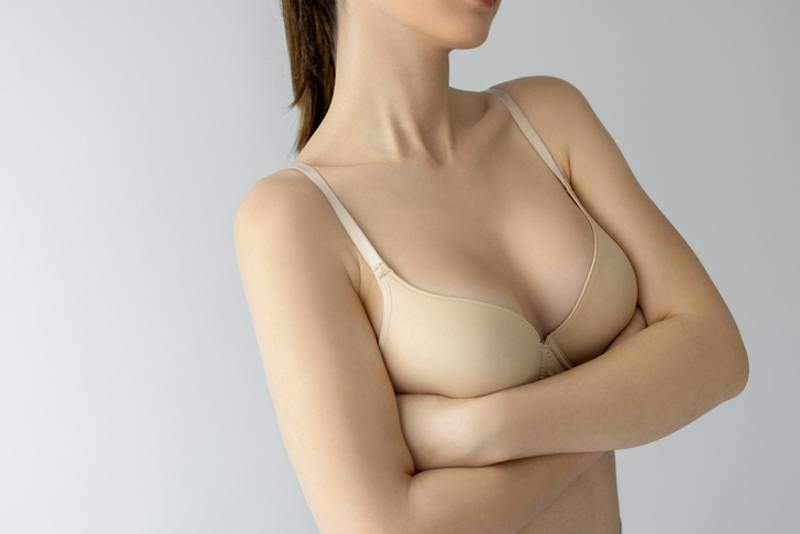
Breast reduction removes excess fat, glandular tissue, and skin, with totals ranging from a few hundred grams to well over a kilogram depending on the degree of reduction. The amount is shaped by anatomy and goals, with blood supply to the nipple setting the safe upper limit. What most patients want to know is how that weight translates to cup size, and whether any of it can be predicted before surgery.
Dr. Joshua Lampert, MD is a board-certified plastic surgeon in Miami who has performed breast reductions across a wide range of anatomies and reduction volumes. This blog draws on his experience to explain the two primary techniques, what research says about gram-to-cup-size estimates, and how candidacy for each is determined.
Traditional Excision vs. Liposuction-Only Breast Reduction
Breast reduction is performed in two fundamentally different ways:
- Traditional excision (reduction mammaplasty): Removes skin, fat, and glandular tissue through carefully placed incisions, then reshapes the breast and repositions the nipple to a higher, more proportionate position. This is the standard approach for patients with significant sagging, dense glandular breasts, or larger reduction goals.
- Liposuction-only reduction: Uses a thin cannula to extract fat through minimal incisions. Recovery is faster and visible scarring is limited, but the limitation is meaningful: liposuction removes only fat. The dense, non-fatty tissue found in many women's breasts can only be addressed through surgical excision.
Who qualifies for liposuction-only reduction depends on breast composition. Women with predominantly fatty tissue and good skin elasticity may be candidates for a moderate size change. Dense glandular tissue or notable sagging generally calls for traditional excision, which offers the reshaping and nipple repositioning that liposuction cannot.
How Much Weight Is Removed, and How Does It Translate to Cup Size?
Cup size is not a fixed surgical unit. Sizing varies between manufacturers, making exact pre-surgical prediction difficult. A peer-reviewed study addressed this by developing a predictive model that correlates tissue removal weight with a patient's starting and target cup size.
According to the American Society of Plastic Surgeons, for approximately every 100 to 300 grams of tissue removed per breast, patients can expect roughly a one cup-size decrease. As a general reference:
|
Tissue Removed per Breast |
Approximate Cup-Size Change |
|
100–300 g |
~1 cup size |
|
300–600 g |
~2 cup sizes |
|
600–900 g |
~3 cup sizes |
|
900 g+ |
3+ cup sizes (highly variable) |
These figures are estimates. Blood supply to the nipple limits how much can be safely removed in a single procedure, and individual results vary considerably.
Why Insurance Uses Tissue Weight as a Qualification Threshold
Insurance carriers evaluate medical necessity in grams, not cup sizes. Most major insurers apply the Schnur Sliding Scale, a 1991 chart that sets a minimum tissue-removal weight based on a patient's body surface area. When a planned reduction meets that threshold, it qualifies as medically necessary rather than cosmetic. The minimum generally ranges from 200 to 800 or more grams per breast, depending on the insurer and the patient's size. Dr. Lampert reviews each case during consultation to determine coverage eligibility and help navigate prior authorization.
Which Technique Is Right for You?
Breast composition can only be properly assessed through an in-person exam. Patients with predominantly fatty tissue and good skin elasticity are more likely to be candidates for liposuction-only reduction, particularly for modest size changes. Greater glandular density or significant sagging generally means traditional excision is the right approach.
Dr. Lampert evaluates breast composition and skin quality during consultation, alongside the blood supply to the nipple, which sets the safe upper limit for tissue removal. Because breast size relates to overall body proportions and how skin behaves over time, these decisions require clinical judgment that no general guide can replace.
Consult Dr. Joshua A. Lampert, MD, Board-Certified Miami Plastic Surgeon
Breast reduction is among the more consequential procedures Dr. Lampert performs, and every plan is built around the individual patient. Knowing which technique fits your anatomy and how much can be safely removed requires a hands-on evaluation. To schedule a consultation at his Miami practice, contact the office today.